
Receiving an offer on your home is an exciting milestone, but it’s rarely the end of the journey. In the Des Moines real estate market—from the historic charm of Sherman Hill to the suburban sprawl of Waukee—the “perfect” offer often requires a little bit of back-and-forth.
That’s where the counter offer comes in.
If a buyer’s initial proposal isn’t quite what you were hoping for, you don’t have to just say “yes” or “no.” You can counter. In this guide, we’ll break down exactly how to handle counter offers in Central Iowa, the potential costs involved, and the professional tricks to ensure you walk away with the best deal possible.
What Exactly is a Counter Offer?
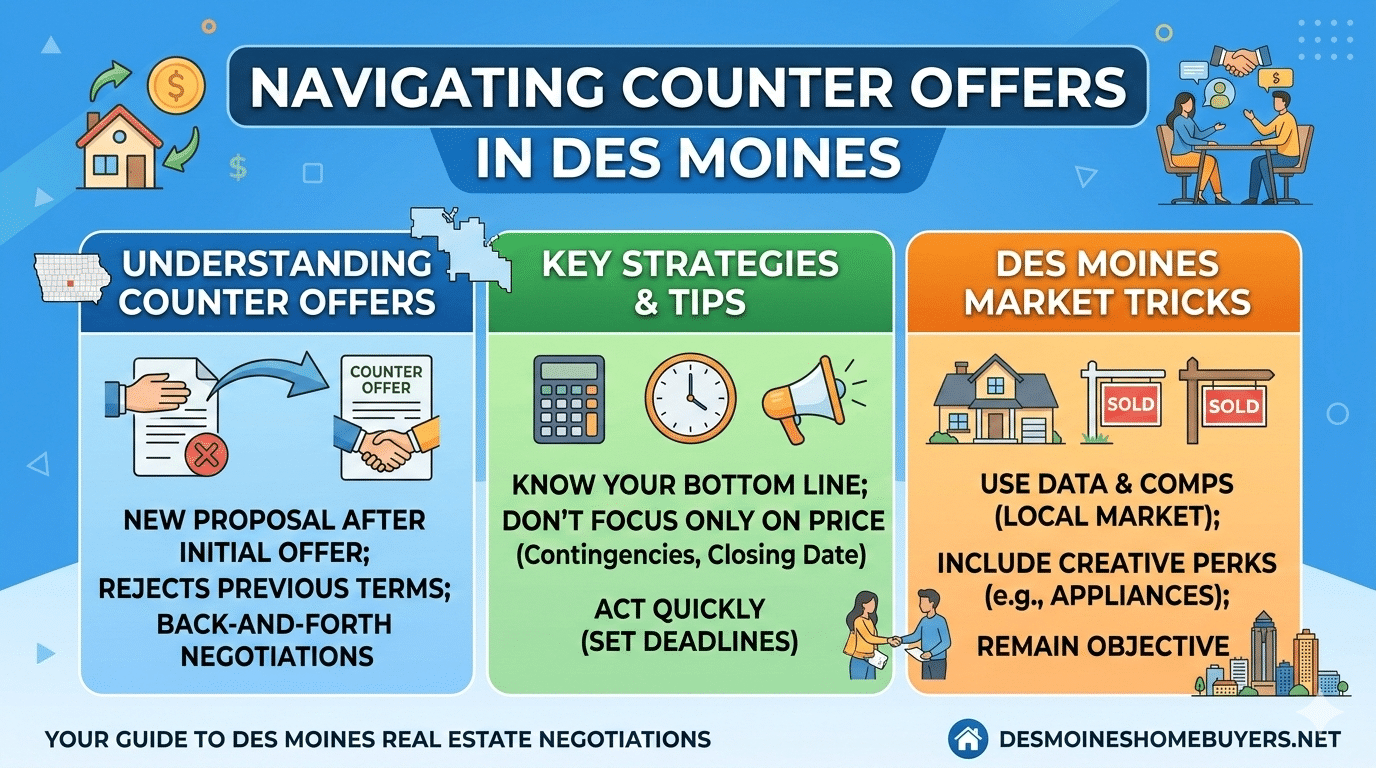
In Iowa real estate, a counter offer is legally a rejection of the original offer and the submission of a brand-new one. Once you send a counter, the buyer’s original offer is void. They can then accept your new terms, reject them, or counter your counter.
Common Terms Negotiated in Des Moines:
- Purchase Price: The most common reason for a counter.
- Closing Date: Aligning the sale with your move to a new home.
- Earnest Money: Increasing the “skin in the game” from the buyer.
- Contingencies: Shortening the time for inspections or financing.
- Possession: Negotiating when you actually hand over the keys.
The “Cost” of Countering
While there is no direct fee to “file” a counter offer, there are strategic costs to consider:
- Market Momentum: Every hour spent negotiating is an hour your home is effectively “off the market” for other buyers. In a fast-moving market like Ankeny or West Des Moines, dragging out negotiations can cause you to miss out on other potential bidders.
- Buyer Fatigue: If you counter too many times over small amounts (like $500 for a leaky faucet), a buyer might get frustrated and walk away to look at another listing.
- Holding Costs: If a counter offer adds two weeks to the closing timeline, you are responsible for an extra two weeks of mortgage payments, utilities, and Iowa property taxes.
Tips for a Successful Counter Offer
1. Know Your “Walk-Away” Number
Before you even look at an offer, have a clear bottom line. Knowing the minimum you need to net from the sale allows you to negotiate with confidence rather than emotion.
2. Don’t Just Focus on Price
Sometimes a lower price with a cash offer and no contingencies is better than a higher price with a “contingent on the sale of their home” clause. Look at the strength of the buyer. Are they pre-approved by a local Des Moines lender? Do they have a flexible closing date?
3. Use “The Middle Ground” Strategy
In a balanced market, a common trick is to meet the buyer halfway between their offer and your asking price. This signals that you are a serious seller acting in good faith, which often encourages the buyer to close the gap.
4. Create Urgency
In your counter offer, set a short expiration—usually 24 to 48 hours. This prevents the buyer from “shopping” your counter offer against other homes currently for sale in the Metro area.
Tricks of the Trade in Des Moines
- The “Stay-Put” Trick: If you can’t budge on price, offer to leave behind something the buyer liked during the showing, such as the high-end washer/dryer or that custom patio set. In Des Moines, where “Iowa Nice” goes a long way, these small gestures can often seal a deal without costing you thousands in equity.
- The Inspection Credit: Instead of lowering the sale price in a counter, offer a “seller credit” toward closing costs. This helps the buyer with their up-front cash needs while keeping your recorded sale price higher (which helps with the appraisal).
- Highlight the Comps: If you are countering with a higher price, have your agent provide recent “comps” from the neighborhood. Showing the buyer that a similar house in Beaverdale just sold for your counter-price makes your demand feel like a data-driven fact rather than a personal whim.
Summary: Should You Counter?
Most of the time, the answer is yes. A counter offer is a sign that a buyer is interested and the “dance” has begun. By staying objective, moving quickly, and focusing on the total value of the contract (not just the price), you can navigate the Des Moines market like a pro.
Need to sell fast without the stress of negotiations? If the back-and-forth of counter offers sounds like a headache you’d rather avoid, consider a direct sale. We buy houses in Des Moines “as-is” for cash—meaning no counters, no repairs, and no waiting.